Makita A-93681 10-Inch 80 Tooth Miter Saw Blade: A Solid Choice for Fine Crosscuts
About This Product
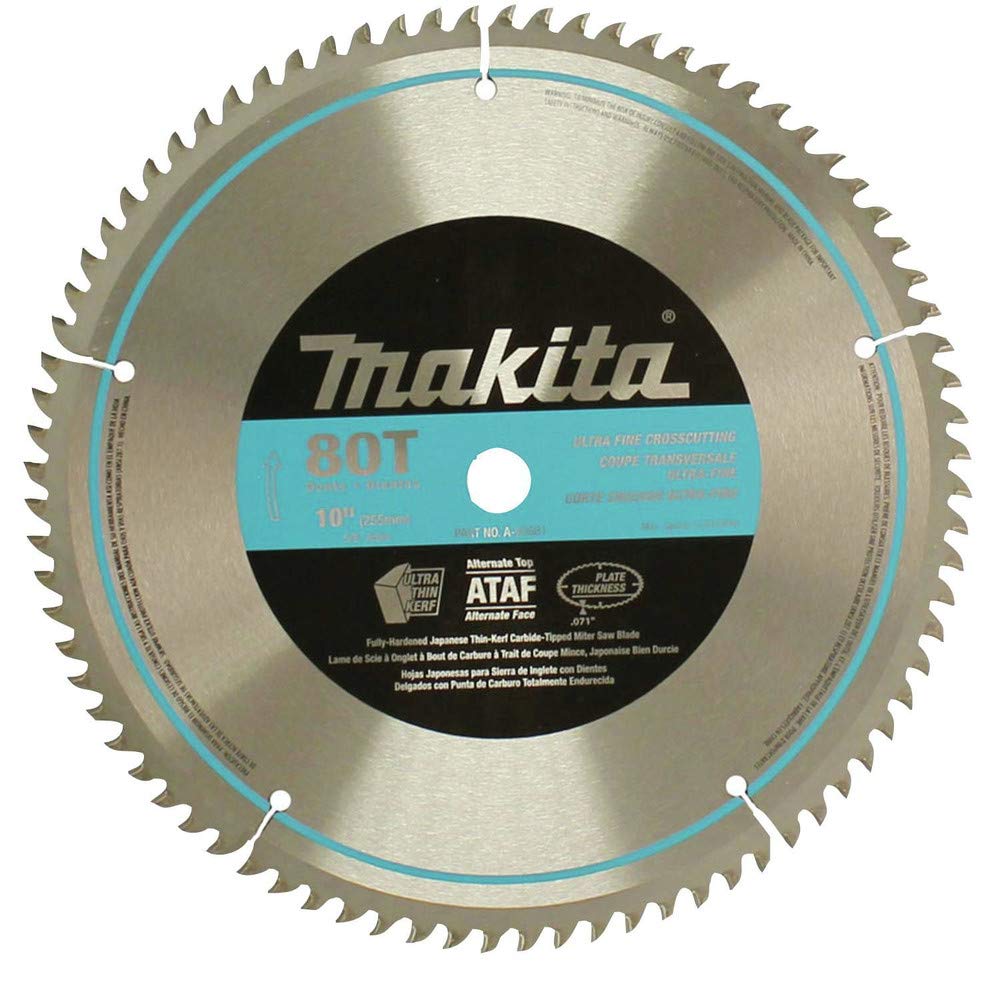
The Makita A-93681 is a 10-inch, 80-tooth miter saw blade designed for finish work and precise crosscutting in wood and wood-based materials. It’s silver in color, with micro-polished teeth, and it sits in a specific niche: for users who need clean, chip-free cuts in trim, molding, and hardwood, but don’t necessarily want to invest in a premium blade line like Forrest or Freud Industrial.
In real-world use, this blade performs admirably for its price point. On a job site, it handles crown molding, baseboards, and even plywood with minimal tear-out. The 80-tooth configuration means it leaves a smooth, almost sanded edge on softwoods like pine, and does a respectable job on hard maple and oak. The micro-polished teeth, which are a key functional feature, reduce friction and heat buildup, which helps maintain cut quality over time. The blade also includes a non-stick coating that resists gumming up from resin in woods like cedar or cherry—a practical benefit if you’re cutting a lot of material in one session.
However, there are trade-offs. The A-93681 is not a ripping blade. With 80 teeth, it cuts slowly if you try to use it for long grain ripping, and it can bog down in thicker stock. It’s also not ideal for non-ferrous metals or abrasive materials like cement board—it’s strictly a wood-cutting blade. Another limitation: while it’s a good value, it doesn’t hold an edge as long as higher-end blades with carbide grades like C4 or C5. After several hours of heavy use on hardwoods, you may notice a slight decline in sharpness. For a contractor cutting hundreds of feet of trim weekly, this might mean more frequent replacements compared to a premium blade.
Comparing it to a typical 40-tooth general-purpose blade, the A-93681 excels in finish quality but lacks versatility. A 40-tooth blade can handle both crosscuts and some ripping, making it a better all-rounder for framing or rough carpentry. The 80-tooth Makita is specialized: it’s for the final cuts, not the rough ones. If you’re deciding between the two, consider your primary task. For a kitchen cabinet installer or a finish carpenter, this blade makes sense. For a deck builder or someone cutting dimensional lumber all day, a lower tooth count would be more efficient.
Who is this blade suitable for? It’s a good fit for:
- Finish carpenters and trim installers who need clean cuts on molding and hardwood
- DIY enthusiasts who want a step up from stock blades on their miter saw
- Users who value a smooth cut over cutting speed
Who might want to look elsewhere?
- Framers or rough carpenters who need fast ripping and crosscutting in 2x lumber
- Anyone cutting metal, plastic, or masonry
- Users who demand maximum blade lifespan for heavy daily use
In terms of build quality, the blade uses a laser-cut body and hardened steel plate, which helps reduce vibration and keeps the cut true. The expansion slots are designed to minimize noise, and they do a decent job, though it’s not a silent blade by any means—expect a moderate whir during use. It fits most 10-inch miter saws with a 5/8-inch arbor, which is standard.
Overall, the Makita A-93681 is a competent blade that delivers on its promise of fine crosscuts. It’s not revolutionary, and it won’t outperform a high-end Freud or Forrest in longevity or extreme smoothness, but it’s a reliable workhorse for its intended purpose. If you’re in the market for a dedicated finish blade and your budget is moderate, it’s worth considering—just keep your expectations realistic about its lifespan and limitations.
Ready to Buy?
Get the best price on Amazon with fast Prime delivery.
🛒 Buy Now on AmazonIrgulmac.com earns from qualifying Amazon purchases.